
How to Field a Ground Ball the Right Way: Pre-Pitch, Positioning, and Footwork
Kenny Flermoen · Founder & Academy Director, Mind Game Baseball Academy · 18 min read
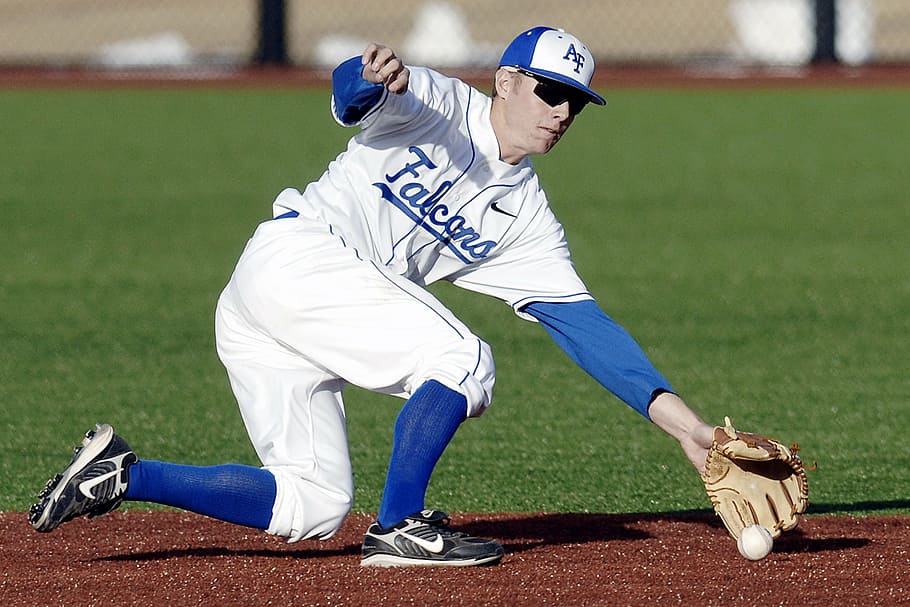
When a youth infielder boots a ground ball, everyone looks at the hands.
Was the glove in the right spot? Did they field it cleanly? Did they use two hands?
Those are reasonable questions, but they are almost always the wrong place to look. In my experience coaching infielders across 21+ years at every level of the game, the error was made before the pitch was thrown. A player who is out of position, flat-footed, and mentally unengaged when the ball leaves the pitcher's hand will boot ground balls that a properly prepared player fields routinely, regardless of how technically sound their glove work is.
Defense starts before the ball is hit. That is the concept most youth baseball programs never teach, and it is the reason fielding remains the most underdeveloped skill set in youth baseball today.
This post covers the three pieces of defensive preparation that determine whether a youth infielder fields ground balls consistently: pre-pitch routine, positioning, and footwork. Get these right and the glove work almost takes care of itself.
Why Most Fielding Instruction Misses the Point
Walk into almost any youth practice and watch how fielding is taught. A coach hits a ground ball. The player fields it (or does not). The coach hits another one.
What you almost never see is instruction on what the player is doing before the ball is hit. Where are their feet? Is their weight on their heels or on the balls of their feet? Are they thinking about the game situation? Do they know where they are throwing before the ball gets to them?
Most youth fielding instruction is reactive. It teaches players what to do after the ball is already in motion. The best defensive players in the game, at every level, are proactive. They have done the mental and physical preparation before the pitch so that when the ball is hit, they are already moving.
Teaching that proactive approach is the gap in youth baseball instruction. It is also the single highest-return investment a player can make in their defensive development.
Part 1: The Pre-Pitch Routine
The pre-pitch routine is everything a player does between pitches and as the pitcher enters their delivery. It is not talked about enough at the youth level because coaches are focused on mechanics. But a player with a sharp pre-pitch routine and average mechanics will outperform a player with excellent mechanics and no routine every single time.
What the Pre-Pitch Routine Looks Like
Step 1: Know the situation before you set your feet.
Every infielder should know the following before each pitch: the count, the number of outs, which runners are on base, and what the hitter has done in previous at-bats if applicable. This information tells a fielder where the ball is likely to be hit and where the throw needs to go before the ball is ever struck.
A player who knows there is a runner on second with one out is already thinking about where the ball needs to go depending on where it is hit, whether the runner is moving on contact, and whether a play at the plate is possible on a sharply hit ball to the left side. That mental preparation is what allows them to react instantly when the ball is hit. A player who is thinking about none of that is starting from zero every single pitch.
Step 2: Get into the ready position as the pitcher begins their windup.
The ready position is not a pose. It is a loaded athletic stance from which a player can move in any direction without wasted motion.
Feet shoulder-width apart or slightly wider. Knees bent, weight on the balls of the feet, not the heels. Hands in front of the body with the glove open and relaxed, roughly knee-height. Eyes forward, watching the pitcher's release point and the hitter's bat path.
A player standing flat-footed with their hands at their sides when the ball is hit has already lost a step before they move. A player in a proper ready position is already in motion before they consciously decide to go.
Step 3: The creep.
This is the piece most youth coaches never teach, and it is one of the most important habits in defensive baseball.
As the pitcher enters their delivery and is about to release the ball, every infielder should take one or two small, rhythmic steps forward. This "creep" or "read step" gets the fielder's weight off their heels and into forward momentum. It is the same principle as a tennis player taking a small split step as their opponent contacts the ball, getting the body loaded and moving so the first step in any direction is explosive rather than flat-footed.
Watch any professional infielder and you will see the creep on every single pitch. Watch most youth infielders and you will see players standing still and watching the pitch travel to the plate. The gap between those two approaches explains a large percentage of the difference in reaction time between youth players.
Teaching the creep: in practice, before you hit a single ground ball in drills, require every player to demonstrate a proper creep on each repetition. If they are standing flat and not moving as the "pitch" is delivered, stop and reset. The habit takes weeks to develop but once it is there it is automatic.
Part 2: Positioning
A player who is in the wrong spot before the pitch faces a much harder play than a player who started in the right spot, regardless of their athletic ability. Positioning is a knowledge skill, and it is one that separates smart defenders from athletic defenders who are never quite in the right place.
Basic Depth and Shade Adjustments
Youth players are almost never taught to adjust their positioning based on the hitter or the situation. They set up in their "spot" and stay there regardless of who is hitting, what the count is, or where the ball has been hit in previous at-bats. That is a significant missed opportunity.
Depth: How deep an infielder plays depends on game situation first, hitter second. With no runners on and no force situation, playing at standard depth and moving on contact is appropriate. With a runner on third and less than two outs where a ground ball could score a run, an infielder may need to play up on the grass to cut off a potential run. These are decisions that need to be made before the pitch.
Shade: Every hitter has a tendency. Pull hitters hit the ball to one side more often than not. Opposite field hitters hit the ball the other way. A shortstop playing a confirmed pull hitter should shade a step or two toward the third base hole. A second baseman playing a hitter who constantly goes the other way should shift a step toward first. These are small adjustments that significantly increase the percentage of balls a fielder reaches.
At the youth level, players do not have scouting reports. But they have watched the hitter. They know what the pitcher is throwing. And they have seen where the ball has gone in previous at-bats that game. That information is available to every player on the field. The question is whether they are using it.
Reading the Pitch
This is the most advanced positioning concept on this list and it is appropriate for players 12 and up.
Middle infielders, particularly the shortstop, can read the catcher's signal to the pitcher and use that information to adjust their positioning slightly before each pitch. A fastball away to a right-handed hitter is significantly more likely to be hit to the opposite field. A curveball down and in to a right-handed hitter is more likely to be pulled. These tendencies are not absolute, but at the margins, a one-step shade in the right direction before the pitch is thrown can be the difference between a routine play and a diving stop.
Teaching pitch-reading to youth players: start by having players watch games and identify where a ball is hit relative to the pitch location and type. You do not need to install the full system at once. Build the habit of awareness first. Ask players between innings what the pitcher has been throwing and where the hitters have been making contact. That conversation, repeated over a season, builds the kind of defensive IQ that makes a 14-year-old look like they are playing the game at a different level than their peers.
Part 3: Footwork on the Ground Ball
With a proper pre-pitch routine and correct positioning, the ground ball itself becomes a more manageable play. Now the footwork has to finish it.
Approaching the Ball
The approach to a ground ball is as important as the catch. How a fielder gets to the ball determines how cleanly they field it and how quickly they can throw.
Charge under control. An infielder should attack a ground ball with purpose, closing distance to cut off bad hops and control the play. But charging without control produces just as many errors as hanging back. The key phrase I use is "fast feet, quiet hands." The feet do the work of closing the ball down. The hands stay quiet and relaxed until the ball is in the glove.
Take an angle, not a straight line. The best approach to most ground balls is a slight arc that positions the fielder to the right side of the ball (for right-handed throwers). This angle, sometimes called the "V approach," keeps the fielder's momentum moving toward the target after they field the ball rather than requiring them to stop and reset. A direct straight-line approach to a ground ball requires the fielder to come to a complete stop at the point of catch, costing time and throwing momentum.
Pick your hop. Every ground ball that travels more than a few feet bounces. The fielder's job is to read the bounce and choose where to field it. A long hop, where the ball is caught near the peak of the bounce, is the easiest play. A short hop, where the ball is caught just after it leaves the ground, is the next easiest. The worst play is the in-between hop, where the ball is caught as it is still rising off the turf and the fielder has no control over where it is going.
Good infielders charge ground balls to eliminate the in-between hop by reaching the ball at the long hop. Average infielders hang back and find themselves stuck with the in-between hop because they arrived too late.
Fielding the Ball
Down to up. Start the glove below the ball and follow it up as needed. This is the single most important concept in fielding a ground ball correctly. A glove that starts low can only go one direction: up to meet the ball. A glove that starts high has nowhere to go when the ball stays low, which is where most fielding errors happen. Every youth player I have coached who consistently boots ground balls is starting their glove too high and trying to come down to the ball. Flip it. Start down, read the hop, and follow the ball up. The ball tells you where to go. Your job is to start below it.
Two hands whenever possible. The throwing hand should be positioned near the glove, ready to cover the ball the moment it enters the glove and initiate the transfer to a throwing grip. Two-hand fielding is faster, more secure, and reduces the frequency of balls popping out of the glove on hard-hit ground balls.
Field the ball in front of the glove-side foot. For right-handed fielders, the ball should be caught roughly in front of the left foot. The glove is on the left hand, so catching over the left foot keeps the glove side forward and creates a natural flow from catch into the throwing motion without requiring the fielder to stop, reorganize their feet, and restart.
The Transfer and Throw
The play is not over when the ball enters the glove. It is over when the throw reaches its target.
Pop up through the ball. After fielding, the fielder's momentum should carry them upward and forward through the play, bringing the glove and ball to the chest in a controlled motion. This is sometimes called "fielding through the ball." It maintains momentum toward the target and initiates the transfer to throwing position naturally.
Step toward the target. As discussed in our post on throwing mechanics, the front foot must step directly toward the target. Not angled, not across the body. This is where many clean fielding plays turn into throwing errors at the youth level. The ball is fielded correctly and then the footwork on the throw puts the ball offline. Step directly toward your target, every time.
Make a decision before you throw. The fielder should know where they are throwing before they field the ball. The game situation determines the throw. If they are thinking about where to throw while the ball is in the glove, the throw is slow and hesitant. If they made that decision before the pitch, the throw is confident and accurate.
Drills That Build These Habits
Creep and React Drill
Purpose: Build the pre-pitch creep and first-step reaction into muscle memory.
Setup: Coach stands at home plate area with a bucket of balls. Fielder is at their position in proper ready stance.
How to run it: Coach simulates a pitching motion. As the coach's arm comes forward to "release," the fielder executes their creep. Coach then rolls or throws a ground ball in any direction. Fielder reacts off the creep, approaches the ball, and fields it.
The goal is not the fielding. The goal is the footwork leading up to it. Run 15 to 20 reps per session and evaluate whether the fielder is in motion at contact or still flat-footed.
V-Approach Cone Drill
Purpose: Train the angled approach to ground balls and eliminate straight-line approaches.
Setup: Place two cones 10 feet in front of the fielder, one directly ahead and one offset two to three feet to the glove side. The fielder must route through the offset cone before fielding the ball.
How to run it: Coach rolls or hits ground balls directly at the fielder. Fielder must move through the offset cone before fielding, ensuring they are taking the correct angle rather than a straight-line approach. After fielding, they complete the throw to the target.
Run 10 reps per side. Progress to balls hit to both sides once the straight-ahead approach is established.
Freeze Drill
Purpose: Check fielding position at the moment of catch without the rush to throw.
Setup: Standard ground ball setup, coach rolling or hitting balls to the fielder.
How to run it: After fielding the ball, the fielder freezes completely in the fielding position and holds for a three count before popping up to throw. The coach evaluates position: hands in front and below the ball, glove out front, knees bent, back flat and parallel to the ground.
The freeze eliminates the rush to throw and forces the fielder to complete the fielding position correctly before moving on. Most youth players who make errors on routine ground balls are rushing out of the fielding position before the ball is secure. This drill stops that habit.
Run 15 reps per session. Progress to full fielding and throw once the position is consistently correct in the freeze.
Rapid Fire Ground Balls
Purpose: Build repetition, hand-eye coordination, and the field-to-throw sequence under volume.
Setup: Coach or feeder stands 15 to 20 feet from the fielder with multiple balls. Another player or coach is at the target base.
How to run it: Coach rolls or hits ground balls one after another with minimal rest between reps. Fielder fields and throws to the target, then immediately resets into the ready position for the next ball.
The key instruction: reset the ready position completely between every rep. A fielder who is still recovering from the last throw when the next ball arrives has a poor ready position and a slow reaction. Rapid fire teaches both volume and the habit of returning to the ready position as the default state.
Situation Ground Ball Drill
Purpose: Connect fielding to game situations and train the pre-throw decision before the ball is hit.
Setup: Full or partial infield. Coach announces a game situation (runners on, outs, count) before hitting each ground ball.
How to run it: Before the ball is hit, every fielder on the field calls out where they are throwing if the ball comes to them. Coach then hits a ground ball to any fielder. That fielder executes the throw they called before the pitch.
This drill is the closest thing to game preparation available in a practice environment. It forces communication, game situation awareness, and pre-pitch decision-making under a degree of pressure. It also exposes which players are and are not engaged mentally between pitches, which is information every coach needs.
The Standard Nobody Is Holding Players To
The fundamentals covered in this post are not advanced. Professional infielders at every level execute all of them on every pitch, every game, every season. The creep, the V approach, the pre-throw decision, the fielding position.
The reason youth players are not doing these things is not that they are too hard to learn. It is that nobody is requiring them. Youth practice time goes to hitting, then pitching, then maybe fielding reps with no instruction on what should happen before the ball is hit.
At Mind Game Baseball Academy, defense is a curriculum, not a warmup. We teach the pre-pitch routine, the positioning adjustments, and the footwork sequences that produce clean, confident defenders. Because at the high school level and beyond, a player who can do both sides of the ball is significantly more valuable than one who can only hit.
Register your player or book a defensive skills evaluation to find out where your player's fielding stands and build the development plan that gets them there.
Frequently Asked Questions
What is the ready position in baseball infield? The ready position is the athletic stance an infielder takes before each pitch. Feet are shoulder-width apart or slightly wider, knees are bent, weight is on the balls of the feet rather than the heels, and the glove is open and relaxed in front of the body at roughly knee height. From this position a player can move quickly in any direction without wasted motion.
What is the creep in baseball and why does it matter? The creep is the small, rhythmic forward step an infielder takes as the pitcher releases the ball. It gets the fielder's weight moving forward off their heels so their first step toward the ball is explosive rather than flat-footed. Professional infielders do this on every single pitch. Most youth players never learn it. Teaching the creep is one of the highest-return defensive habits a coach can build in young players.
Why do youth baseball players make so many fielding errors? The most common causes are flat-footed ready position (no creep), poor positioning before the pitch, straight-line approach to the ball that produces in-between hops, and rushing the transfer to throw before the ball is secure in the glove. All of these are correctable with focused instruction. Most youth fielding errors are preparation errors, not athletic errors.
How do you teach an infielder to charge a ground ball? Teach the V-approach: the fielder takes an angled route to the right side of the ball (for right-handed throwers) rather than approaching in a straight line. The angle keeps momentum moving toward the target after the catch. Pair that approach with the instruction to "pick your hop" by reading the bounce and attacking the long hop rather than waiting and getting stuck on the in-between hop.
At what age should players start learning advanced fielding concepts like pitch reading and positioning adjustments? Basic pre-pitch routine and the creep should be introduced as early as age 8 or 9 in an age-appropriate way. Positioning adjustments based on hitter tendencies are appropriate to introduce around age 11 or 12. Reading the catcher's signal and adjusting shade by pitch type is an advanced concept best introduced at 13 or 14, when players have enough baseball experience and body awareness to apply it in real game situations.
Kenny Flermoen is the Founder and Academy Director of Mind Game Baseball Academy, based in North Augusta, SC. He brings 21+ years of coaching experience from tee-ball through Division I, a B.S. in Sports Management, and a Master's degree in Coaching and Athletic Administration from Concordia University-Irvine.
About the author

Related posts