The College Baseball Recruiting Timeline: What Actually Happens and When to Start
Kenny Flermoen · Founder & Academy Director, Mind Game Baseball Academy · 19 min read
The question I get most often from CSRA baseball families with players in middle school or early high school is some version of this: "When should we start thinking about college recruiting?"
The honest answer is that thinking about it is not the issue. Most families think about it plenty. The issue is that most families either start the actual process too late, start it with the wrong strategy, or spend significant money on showcase circuits without understanding what college coaches are actually doing during those events and what it takes to be on their radar before they arrive.
This post is the honest version of the college baseball recruiting timeline. Not the version designed to sell you a recruiting service subscription. The version built from 21+ years of watching players develop through this process, with a clear-eyed look at what actually matters at each stage and what most families get wrong.
Before Anything Else: The Landscape Has Changed
If you are reading advice about college baseball recruiting that was written more than two or three years ago, it may be significantly out of date. The landscape shifted materially in 2025 with the implementation of the House v. NCAA Settlement, and families who do not understand what changed will be making recruiting decisions based on a system that no longer exists.
What Is the House Settlement?
The House v. NCAA Settlement is a landmark legal ruling approved by a federal judge on June 6, 2025, that fundamentally changed how college athletics operates at the Division I level. You can read the full NCAA overview at ncaa.org, but here is what it means in plain language for a baseball family.
Before the settlement: D1 baseball programs were limited to 11.7 scholarships per roster. That meant a 35-man roster where most players were on partial scholarships, some received nothing, and walk-on spots were common. Programs routinely carried 35 to 40 players.
After the settlement (effective July 1, 2025): D1 programs that opted into the settlement no longer have a scholarship cap. They can offer a full, partial, or no scholarship to any player on the roster. However, the roster itself is now capped at 34 players total. Schools can fund every one of those 34 spots if they choose to.
What this means for recruits: The math changed significantly. With a 34-man roster cap, every spot on the roster now has real value and coaches are being selective about every single one. Walk-on opportunities at D1 programs that opted in have largely disappeared. A borderline D1 player who might have previously walked on and earned a scholarship over time is now being redirected toward D2, NAIA, or JUCO programs, which in turn has made those markets more competitive as well.
A note on who this applies to: The settlement currently applies to D1 programs that opted in, which includes all Power 4 conference schools and many others. D2, D3, NAIA, and JUCO programs operate under their own separate structures and were not directly affected by the settlement. When evaluating any D1 program during the recruiting process, it is worth asking directly whether that school opted in and what their scholarship structure looks like under the new rules.
The practical implication for recruiting strategy: cast a wider net earlier, target multiple division levels simultaneously rather than fixating on one, and do not treat walk-on status at D1 as a realistic fallback plan.
With that context established, here is what the full timeline actually looks like.
The Honest Truth About Division Levels
Before the grade-by-grade timeline, there is something that needs to be said directly, because most recruiting content never says it.
Most players who go on to play college baseball do not play D1. And for a significant number of them, that is not a consolation prize. It is the right outcome.
There are over 1,900 colleges and universities offering baseball across D1, D2, D3, NAIA, and JUCO. The total number of D1 programs is 302. Everything outside those 302 programs is not a lesser version of the same goal. It is a different version of the same goal, and for many players it is genuinely the better fit.
D2 programs can offer significant scholarship money and high-level competition without the roster squeeze that now exists at D1 post-House Settlement. Some D2 programs produce professional players every year. D3 programs offer a college baseball experience alongside an academic environment where the student-athlete balance is explicitly the point. NAIA programs have tremendous coaching, competitive schedules, and scholarship flexibility that many families overlook entirely. And JUCO baseball is one of the most strategic and underutilized paths in the sport. Players who develop at the JUCO level and transfer to four-year programs are a consistent pipeline of some of the best college baseball players in the country.
The family that locks in on D1 from the time their son is 12 years old and evaluates every other option as a failure is the family that most often makes the process more painful, more expensive, and less successful than it needs to be. The family that identifies the right level of fit based on the player's actual tools and goals, and pursues that level with real intention, almost always ends up in a better place.
Throughout this post, the timeline covers all levels equally. D1 has specific NCAA contact rules that shape the calendar. But the goal is a college baseball opportunity that is the right fit for the individual player, not the highest division name possible.
The Grade-by-Grade Reality
Middle School (Ages 12 to 14): Development, Not Recruiting
The most common mistake I see CSRA families make with players in this age range is prioritizing exposure over development. They spend money on showcase events, recruiting profiles, and highlight videos for a player who is 13 years old, while the work that will actually determine whether that player has a college career at any level — mechanics, Mind Game, athleticism — is either happening at the margins or not happening at all.
Coaches at every division level are not meaningfully recruiting players this young in any official sense. What matters right now is exclusively the development work.
What should be happening at this stage: everything in the development column. Mechanics established and refined. The Mind Game framework beginning to take shape. Athleticism built across multiple sports. A player who arrives at freshman year of high school with sound fundamentals, real situational awareness, and a competitive travel ball resume has done the middle school years correctly regardless of what college level they ultimately aim for.
What does not need to happen yet: recruiting profiles, paid showcase registrations, or any form of direct outreach to college programs. The investment at this stage should go into development, not exposure.
Freshman Year (9th Grade): Build the Foundation, Start the Record
Your only job freshman year is to become the player worth watching at whatever level is the right fit. NCAA rules prohibit D1 coaches from initiating contact before August 1 of a player's junior year, but D3, NAIA, and JUCO programs have no such restriction, and D2 contact opens June 15 after sophomore year. What that means practically is that the development work you do freshman year will be evaluated sooner than most families expect by programs outside D1.
Freshman year is the time to establish baseline measurables and start tracking them. Exit velocity off a tee or soft toss, 60-yard dash time, arm velocity if a pitcher. Not to send to coaches, but to establish a starting point that creates a trajectory story over the next two to three years. A player who can show meaningful improvement in measurables from freshman to junior year is telling a compelling development story at any division level.
Register with the NCAA Eligibility Center and confirm the core course plan. This matters at every level, not just D1. D2 and NAIA programs also have academic eligibility requirements, and academic eligibility issues are one of the most common and entirely preventable reasons players lose college opportunities they earned on the field.
Compete on a legitimate travel ball team that plays in tournaments where coaches can find performance data. Perfect Game and USSSA are the two primary systems where coaches at all levels pull player information. A player who is not competing in one of those systems is largely invisible to the college recruiting process regardless of how good they are.
Sophomore Year: Get Visible and Build the Outreach Foundation
Sophomore year is when the recruiting process transitions from pure development to development plus visibility. NCAA D2 coaches can begin contacting student-athletes beginning June 15 after sophomore year, and D3, NAIA, and JUCO programs have no contact restrictions at all. That means most players should have their recruiting profile active and be initiating outreach to programs at their realistic target level by the summer after sophomore year, regardless of which division that is.
This is also the year to get honest about what the realistic target level actually is. A player whose measurables and performance sit comfortably in D2 or NAIA territory should be building a D2 and NAIA target list with the same intention and energy that a borderline D1 player puts into their D1 list. Waiting to see if D1 interest materializes while ignoring D2 and NAIA programs that would offer real opportunity is a strategy that costs players quality options at the right level.
Sophomore year outreach should include creating a highlight video with game footage, swing video from front and side angles, and verified measurables. College coaches at every level want to see in-game at-bats showing plate approach before the pitch, not just cage swings. A highlight reel that is entirely cage footage is less convincing than one that shows a player processing real pitching in real game situations.
Attending a first showcase during sophomore year is appropriate timing for most players. The goal is not to get discovered. It is to establish a profile in the system, get an objective evaluation of measurables relative to target division standards, and identify the gap between current performance and the standard required at the level the player is actually targeting.
The most common sophomore year mistake is attending too many showcases chasing exposure before the materials and the development are where they need to be. Coaches arrive at showcases with target lists already built from travel team performance, recruiting profiles, and their own scouting networks. If a coach does not know a player's name before the showcase, the showcase will not change that. Getting on the list before the showcase matters more than the showcase itself.
Junior Year: The Most Important Year in the Process
Junior year is when the NCAA officially opens the contact window and when most of the actual recruiting decisions for competitive programs get made. August 1 of junior year is the first date D1 coaches can initiate contact with student-athletes. For players who have been on a program's radar through sophomore year travel ball and outreach, this is the moment things move from watching to actively recruiting.
Junior year is when recruiting picks up speed. Coaches start watching players more closely, and many offers come before senior year even starts. At Power 5 programs and high-major conferences, the class of 2028 is substantially filled by the end of junior year summer. A player who arrives at senior year hoping to attract D1 interest for the first time is largely too late at the top end of the market.
What needs to happen in junior year, in order:
August 1: Send personalized, specific outreach emails to every program on the target list. Not a mass email. A specific email to each school referencing their program, their coaching staff, and why this player is a fit. Include the highlight video link, verified measurables, and academic information. Coaches receive dozens of emails when the contact window opens. An email that is actionable in 90 seconds, with a video link, verified numbers, and a specific expression of interest in that program, stands apart from vague mass outreach.
Fall of junior year: Attend showcases where the target programs' coaches will be present. This is not the time to get discovered. It is the time to perform in front of coaches who already know the player's name from summer outreach. September 1 of junior year is when unofficial visits become permitted and when students should register with the NCAA Clearinghouse for official visit eligibility.
Spring of junior year: High school varsity performance is being watched. Coaches will evaluate players in their high school environment during the contact period. How a player performs under the actual conditions of a school season, not just a showcase setting, matters to programs that are evaluating character and competitive consistency.
Summer between junior and senior year: The highest-leverage showcase window of the entire recruiting process. This is when uncommitted players who are D1-level prospects get their best remaining opportunities for D1 contact, and when players targeting D2, D3, NAIA, or JUCO should be most active.
Senior Year: Know Your Market and Execute
Senior year looks different depending on where the recruiting process stands, but it is not a dead end at any level and should not be treated as one.
For players who committed during junior year at any division level, senior year is about finishing strong academically, maintaining eligibility, and arriving on campus as prepared as possible. For players who are still in the process, senior year requires a clear-eyed assessment of which level of opportunity is realistically available and an efficient strategy for pursuing it.
D1 scholarship opportunities for uncommitted seniors are limited at most programs, which have their upcoming classes well underway by fall of senior year. That is a hard truth worth accepting early rather than late, because chasing D1 programs that have already filled their class through all of senior year costs time and money that could be building real relationships at the right level.
D2 baseball is a legitimate, competitive, high-quality environment that many families overlook. Some D2 programs have more scholarship flexibility post-House Settlement than comparable D1 programs, longer development timelines, and coaches who give players real roles rather than depth chart spots. The competition level is real. The coaching at many programs is excellent. If a player's trajectory fits D2, pursuing it with full intention is not settling.
D3 baseball is genuinely the right choice for a specific kind of player: one who wants to compete and develop while being in an academic environment where athletics is part of the college experience rather than the center of it. D3 programs cannot offer athletic scholarships, but academic merit aid at D3 institutions can be significant, and the overall college experience is something many players who chose higher-profile programs later say they would have reconsidered.
NAIA programs combine scholarship availability, competitive baseball, and flexibility in ways that make them one of the most underutilized options in the recruiting landscape. Many NAIA coaches are tremendous developers of players, and the overall scholarship packages at NAIA institutions are frequently more generous than what comparable D1 or D2 programs can offer.
Junior college baseball is one of the most strategic paths in the sport. A JUCO year, or two, gives a player development time, competitive reps, and a chance to reset the recruiting process with a more mature, more capable version of themselves. The transfer pipeline from JUCO to four-year programs produces college players every year at every division level, including D1. Families that dismiss JUCO because it does not match the story they had in mind often discover later that it was the path that would have produced the best outcome.
The Most Common Recruiting Mistakes CSRA Families Make
Waiting for coaches to find them. College coaches do not discover players by accident. A player sitting on talent in the CSRA, performing well in local travel ball, and waiting for their phone to ring is going to wait indefinitely. Proactive outreach, starting no later than the summer after sophomore year for most levels, is what actually initiates contact.
D1 tunnel vision. This is the most expensive mistake in youth baseball recruiting, financially and emotionally. A family that fixates on D1 from the time their son is 12 years old and treats every other division as failure is a family that will spend more money, experience more rejection, and frequently end up in a worse situation than one that identified the right level of fit and pursued it with full intention from the start. There are over 1,900 college baseball programs in this country. The right one for a given player is the one where they will compete, develop, and thrive. That is not always the highest division name available.
Fixating on one school within a division level. Most families identify a D1 school they love and spend two years pursuing it exclusively. The right strategy is targeting multiple programs at multiple levels simultaneously. Pursuing all of them from the start produces more options, better outcomes, and dramatically less anxiety than waiting to see if one specific program offers before looking at alternatives.
Spending showcase money without outreach to go with it. A showcase appearance without prior coach contact produces very little. The sequence is: build the profile, do the outreach, then attend the showcase where coaches who know the player's name will be watching. Not the other way around.
Confusing a college camp invitation with recruiting interest. College programs run camps that are open to virtually any player who pays the registration fee. Receiving a camp invitation is not the same as receiving recruiting interest from the program. These are often revenue-generating events. Attending them has value, primarily for direct face time with a coaching staff, but treating a camp invitation as evidence of genuine recruiting interest produces false confidence about where the process actually stands.
Not prioritizing academics. Many programs require proof of eligibility, and coaches actively seek players who are good teammates, students, and citizens. A player with D1-caliber tools who does not meet the academic eligibility requirements loses those opportunities entirely. Grades are not separate from the recruiting process. They are part of it.
What MGBA Players Are Building Toward
The recruiting process is the evaluation of everything that was built in the years before it. A player who arrives at junior year with sound mechanics, a real Mind Game, and a competitive travel ball resume is in a position to be recruited at the level their tools and trajectory support. A player who arrives at junior year with raw tools but no development foundation, no situational awareness, and no track record in competitive systems is starting from a much harder place regardless of what division they are targeting.
This is why the work we do at Mind Game Baseball Academy starting at ages 10, 11, and 12 is not disconnected from the recruiting process. It is the foundation of it. The swing mechanics, the defensive fundamentals, the Mind Game framework, the situational decision-making, the mental composure under pressure — these are exactly the things a college coach is evaluating when they watch a player perform, at every level from D1 to JUCO.
A player who has been developed the right way over years arrives at the recruiting process with something real to show. The showcase circuit and the outreach emails are how that something gets in front of the right coaches at the right programs, whatever level that turns out to be.
Book a development evaluation to find out specifically where your player stands, which division level is a realistic target based on current trajectory, and what the development path looks like between now and the recruiting window that matters.
Frequently Asked Questions
At what age should a baseball player start the college recruiting process? Development should be the primary focus through middle school. Proactive recruiting outreach to college programs should begin no later than the summer after sophomore year for D2, D3, NAIA, and JUCO targets, and August 1 of junior year is the first date D1 coaches can respond to contact. The development work that determines whether a player has college opportunities begins years before any outreach does.
Can D1 college coaches contact a player before junior year? No. NCAA rules prohibit any communication between D1 coaches and potential recruits before August 1 of their junior year of high school. However, players and families can initiate contact with D1 coaches at any time, and D2, D3, NAIA, and JUCO programs operate under different and more flexible contact rules.
How important are showcases in the college baseball recruiting process? Showcases matter most when a player already has prior contact with the coaches who will be watching. A showcase appearance without prior outreach produces limited results because coaches arrive with established target lists rather than evaluating unknowns. The right sequence is outreach first, showcase second, where the showcase confirms what the coach has already heard about the player rather than introducing them for the first time.
What measurables do college coaches look for in baseball recruits? The key measurables vary by position and division level, but broadly include exit velocity, 60-yard dash time, arm velocity for pitchers and position players with premium arm tools, and pop time for catchers. More important than any single number is a trajectory of improvement across the recruiting window. A player whose measurables are improving meaningfully from sophomore to junior year is telling a more compelling story than one whose numbers plateaued.
Is it too late to get recruited if a player has not committed by junior year? Not at all division levels. While the top D1 programs fill most of their classes by the end of junior year, D2, D3, NAIA, and junior college programs recruit actively into senior year and beyond. A player who approaches senior year without a commitment needs a clear-eyed assessment of which level of opportunity realistically exists and an efficient strategy for pursuing those programs rather than continuing to target programs that have already finalized their class.
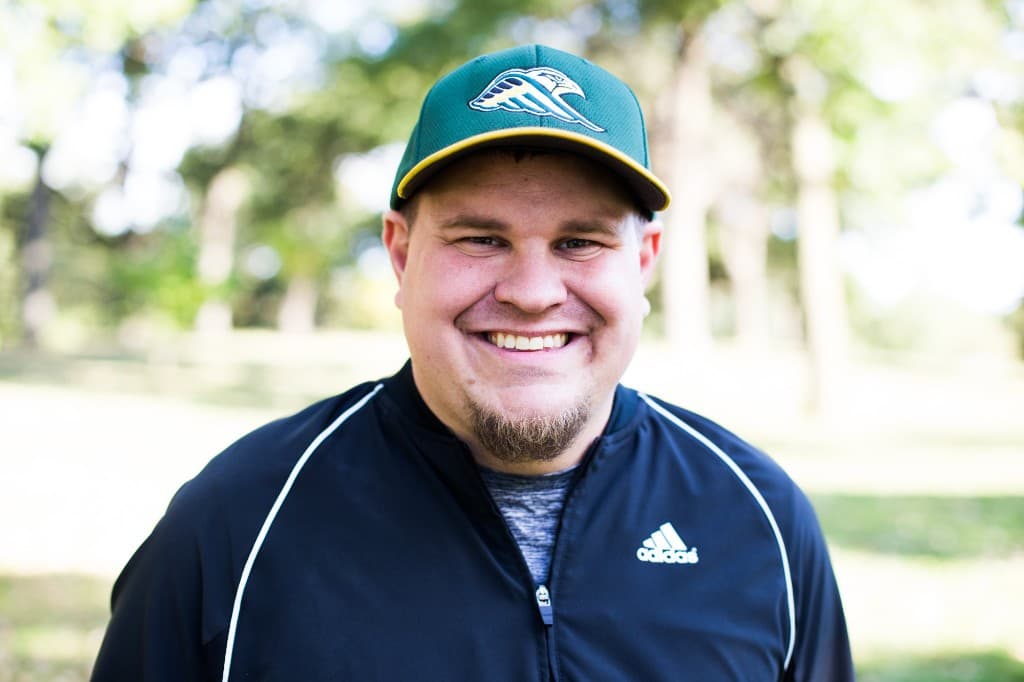
Kenny Flermoen is the Founder and Academy Director of Mind Game Baseball Academy, based in North Augusta, SC. He brings 21+ years of coaching experience from tee-ball through Division I, a B.S. in Sports Management, and a Master's degree in Coaching and Athletic Administration from Concordia University-Irvine.
About the author
Related posts