
The Hitter's Mind Game: What an At-Bat Actually Looks Like When You Are Thinking It Right
Kenny Flermoen · Founder & Academy Director, Mind Game Baseball Academy · 16 min read
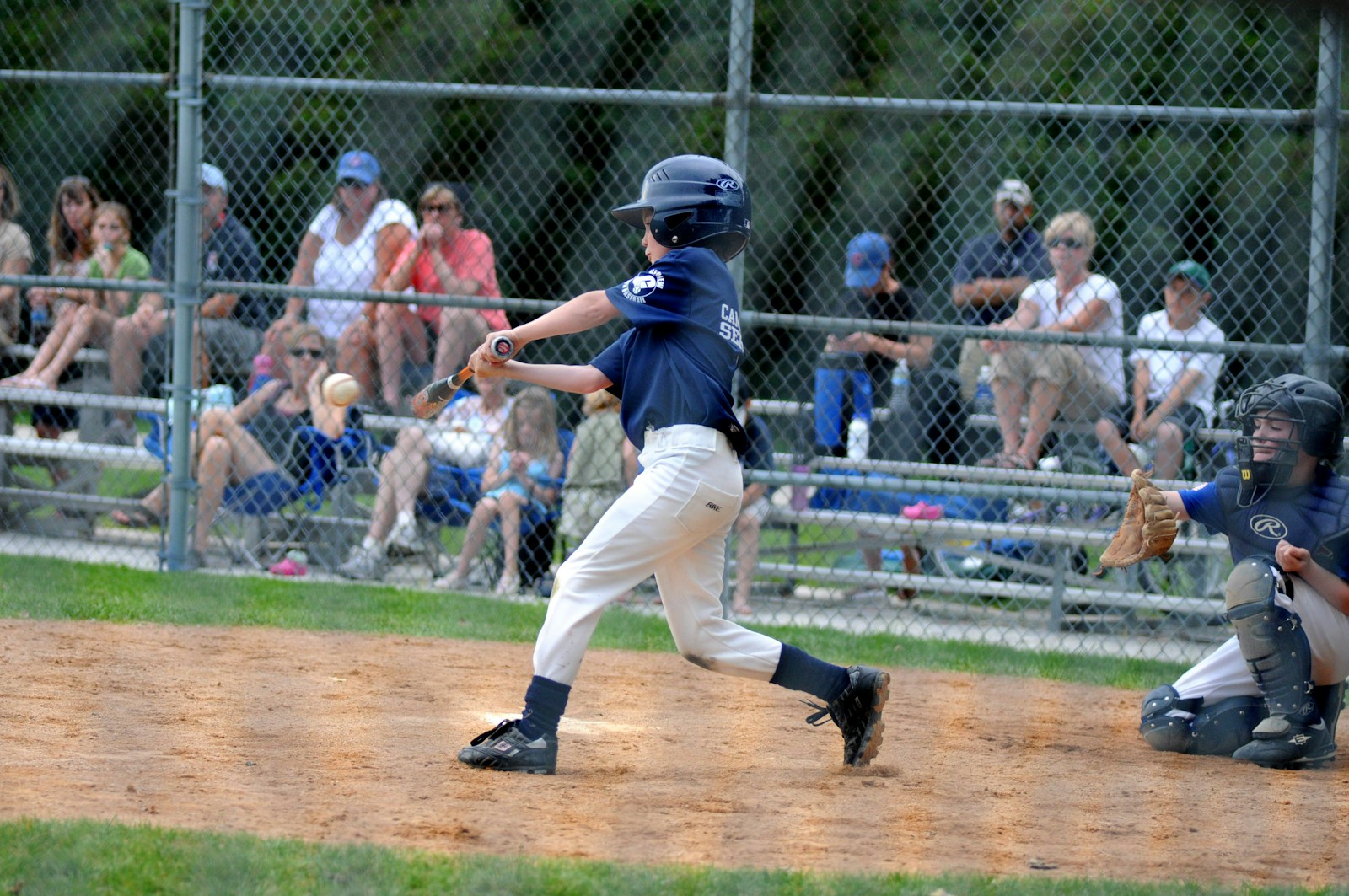
In the previous chapters of this series, we covered every position on the field, the catcher, the pitcher, the shortstop, third base, center field, and the corner outfielders. This chapter closes the position arc by covering the one role every player on the field occupies at some point in every game, the one where the mental game is most visible, most personal, and most often the deciding factor in whether a player's physical tools actually show up.
The batter's box.
Of all the places The Mind Game shows up in baseball, the at-bat is where it is most exposed. There is nowhere to hide in the box. The pitcher has a plan. The catcher has a plan. The defense is positioned specifically for this hitter in this situation. And the hitter is standing sixty feet and six inches away from all of it, alone, with roughly four seconds of actual pitch flight time to execute a swing that took years to build.
What most youth hitters do not realize is that the four seconds of pitch flight are the smallest part of the at-bat. The decisions that determine whether those four seconds go well were made, or should have been made, before the hitter ever stepped into the box.
This chapter is about those decisions.
An At-Bat Is Not One Swing
This is the first and most important thing I teach every hitter who comes through MGBA, regardless of age.
An at-bat is not a single event. It is a sequence. It starts before the first pitch when the hitter builds their approach. It continues through every pitch as the count changes and the situation evolves. It ends at contact or a third strike, but the decisions that shaped it were made pitch by pitch, not all at once.
A hitter who treats an at-bat as one swing is a hitter who is always reactive. The pitcher throws, the hitter reacts, and the result is whatever the reaction produces. Sometimes that is a hit. Often it is not, and the hitter has no real understanding of why, because they were never thinking the at-bat in the first place. They were just standing in the box waiting for something to hit.
A hitter who treats an at-bat as a sequence of decisions is a hitter who is active. They came into the box with a plan. When the first pitch came in and they took it, that take was a decision, not a hesitation. When the count went to 1-0, their plan adjusted. When the pitcher went to a different location on 1-1, they filed that information away for the next pitch. The at-bat has a shape and they are inside it, thinking it through rather than waiting for it to happen to them.
The difference between those two hitters is not talent. It is The Mind Game.
Building the Approach Before the At-Bat
An approach is what a hitter has decided before they step into the box. Not a mechanical thought about their swing, a plan for the at-bat itself.
Most youth hitters do not have one. They walk to the plate with a general intention to hit the ball hard, which is not an approach. It is an outcome. An approach is about what you are looking for, where, and why.
Here is what building an approach actually looks like.
What has this pitcher been throwing? Before a hitter's first at-bat, they should have watched the pitcher's previous hitters from the on-deck circle and the dugout. What has been thrown for strikes? Where has it been located? Has the pitcher been getting ahead early, or has he been behind in counts? That information shapes the approach for the first at-bat before the hitter has seen a single pitch himself.
What is the situation asking for? A hitter with nobody on and no outs in a tie game has a different job than a hitter with a runner on second and nobody out. In the second situation, the hitter's approach might be to hit the ball to the right side regardless of the result on the scoreboard, because moving the runner to third with one out is the right baseball play. That is a situational approach, and it exists because the hitter understood the game situation before he stepped in, not because a coach yelled it from the dugout.
What am I looking for on the first pitch? This is the most specific piece of approach-building and the one most youth hitters skip entirely. Before every pitch, a hitter should have decided what they are looking for. Fastball, middle third, let it rip. Anything off-speed, take it until two strikes. Inside pitch only, everything else gets taken. The specific approach changes based on the count and the pitcher, but the habit of having one is what separates a hitter who is in control of the at-bat from one who is just reacting to it.
How the Approach Changes Through the Count
An approach is not static. It is a living plan that adjusts as the count evolves, and the adjustments are logical, not random.
Getting Ahead: 1-0, 2-0, 2-1, 3-1
Hitter's counts are the counts where the pitcher needs to throw a strike. The hitter can afford to be selective because the odds favor another pitch coming. A 2-0 count is one of the highest-leverage moments in an at-bat for a hitter, and most youth hitters waste it by either taking a pitch they could drive or expanding their zone because the ball was close. The right play on 2-0 is to be in full attack mode on something specific, usually a fastball in a specific location, and to take anything that does not fit that description. Not swing at everything. Not take everything. Look for your pitch and drive it.
Even Counts: 0-0, 1-1, 2-2
These are the chess match pitches. The pitcher is not desperate and neither is the hitter. The approach in even counts is to stay within your plan while acknowledging that the next pitch could go either way. On 0-0, the first pitch of an at-bat, the approach I teach is to be ready to hit something specific rather than just seeing a pitch. Too many youth hitters take the first pitch as a matter of habit rather than as a decision, which gives the pitcher a free strike and moves the hitter immediately to a more difficult count.
Two Strikes: 0-2, 1-2, 2-2, 3-2
The approach changes most significantly here, and this is where The Mind Game matters most for hitters at the youth level.
Two strikes does not mean panic. It does not mean swing at anything close. It means the approach shifts from hunting a specific pitch in a specific location to protecting the zone and staying alive. The swing might shorten slightly. The focus expands from a preferred pitch to anything in the strike zone. But the mental state should be the same: controlled, present, ready.
The hitter who gets to two strikes and starts thinking about striking out has already lost the at-bat before the pitch is thrown. The hitter who gets to two strikes and thinks "I'm still at the plate, I'm still in this, next pitch" is still competing. The physical swing does not change much between those two hitters. The result does, because the mental state going into the pitch affects the quality of the swing whether the hitter consciously recognizes it or not.
Reading the Pitcher During the At-Bat
A hitter who is not learning during an at-bat is a hitter who is leaving information on the table that a thinking hitter would use.
Every pitch in an at-bat tells the hitter something. The question is whether they are listening.
A fastball that catches the outer corner tells the hitter that pitch exists in this pitcher's arsenal today. If the pitcher goes there early in the at-bat, there is a reasonable chance he goes back to it. A hitter who files that information away can be ready for it rather than reacting to it.
A breaking ball in the dirt on 0-1 tells the hitter the pitcher is willing to throw it for a chase pitch. A hitter who chased it and missed is now behind, but they also know that pitch is in play for the rest of the at-bat and can lay off it on the next trip.
A pitch that was supposed to be away that ran back over the middle tells the hitter the pitcher does not have full command of that pitch today. The pitcher may not be able to reliably put it where he wants. That changes the approach for the rest of the at-bat and the rest of the game.
Most youth hitters are not processing this information because nobody taught them to look for it. They see the pitch, react to it, and start over from zero on the next one. A hitter who carries information from pitch to pitch within an at-bat is operating at a fundamentally different level than one who treats each pitch as its own isolated event.
What to Do After a Bad Swing
We wrote about the psychological reset after a strikeout in the mental game chapter. The hitter's Mind Game also includes a faster, in-at-bat version of that same skill: resetting after a bad swing on pitch one so it does not affect pitch two.
A hitter who takes a terrible hack at a curveball in the dirt on 0-0 is now 0-1 with a bad swing on their ledger. What they do with that information determines whether the at-bat continues on their terms or on the pitcher's.
The wrong response is to try to make up for the bad swing by expanding the zone on the next pitch, swinging at anything borderline to prove they can hit. That is the pitcher winning the psychological battle and the hitter not knowing it.
The right response is a brief physical reset between pitches, the same routine they use every time, and then a reset of the approach for the new count. 0-1 is not a disaster. It is a count. The pitcher still has to throw a strike. The hitter still has an at-bat. Reset the approach, get a pitch to hit, and compete.
This skill, resetting the approach pitch to pitch rather than carrying a bad swing into the next one, is one of the more specific and teachable pieces of The Mind Game at the plate. I coach it by asking hitters after every at-bat in practice: "What was your approach on pitch two after you missed pitch one?" If they cannot answer, the approach did not exist. If they can answer specifically, The Mind Game is developing.
Building On a Good At-Bat
The flip side of recovering from a bad swing is something coaches spend far less time on: what to do after a good at-bat.
A hitter who got a hit on a well-executed approach sometimes abandons that approach the next at-bat because they feel good and stop being deliberate about it. Confidence is valuable. Confidence without discipline becomes complacency, and complacency produces a reactive hitter who is back to waiting rather than planning.
The best hitters I have coached carry the approach from a successful at-bat forward as information, not as a formula. "That worked because I stayed back on the breaking ball. The next at-bat I need to be ready for him to adjust, which means he might go inside early to take that pitch away." That is building on success rather than riding it blindly.
Teaching this means asking the question after good at-bats too. "Why did that work? What does it tell you about the next time you face this pitcher?" A hitter who can answer that question is playing the game at a level that physical tools alone cannot reach.
Coaching the Hitter's Mind Game by Age
Ages 8 to 10: One Thing to Look For
At this age, the concept of an approach is best introduced as the simplest possible version: one thing to look for before each pitch. "I'm looking for a fastball I can hit hard." That's enough. Do not overload a 9-year-old with pitch-by-pitch adjustments and count management. Build the habit of coming to the plate with one specific intention rather than no intention at all. That single habit, practiced hundreds of times over a season, is the foundation everything else gets built on.
Ages 11 to 13: Introduce Count Management
At this stage, players have enough game experience to understand how the count changes the dynamic of an at-bat, and they are facing pitching that is varied enough that the count actually matters. Introduce the concept of hitter's counts and pitcher's counts. Explain why 2-0 is a different at-bat than 0-2 and what the approach adjustment looks like in each. Start asking players what their approach was after every at-bat in practice, not as a test but as a habit.
Ages 14 and Up: Full Approach, Pitch Reading, and Adjustment
At this level, a hitter should be building a real approach before every at-bat based on what they have seen from the pitcher, adjusting that approach pitch by pitch based on what the count and the pitcher's patterns are telling them, and resetting cleanly after both bad and good swings. This is the full version of the hitter's Mind Game, and it is appropriate here because players at 14 and up are facing enough pitching variety and competitive pressure that the mental side of hitting is a real factor in performance, not just a concept.
The At-Bat as the Most Complete Expression of The Mind Game
The hitter's Mind Game closes the position chapter arc of this framework, and it does so because the at-bat is the moment where every pillar of The Mind Game converges in one place, on one player, in real time.
Pillar One is there: the emotional composure to reset after a bad swing, the body language to step back in after a strikeout, the pre-pitch routine that puts a hitter in the same mental state regardless of what just happened.
Pillar Two is there: the approach built before the at-bat, the situational awareness that shaped it, the pitch-by-pitch adjustment that sharpens it, and the ability to carry information from one at-bat to the next.
A hitter who has developed both pillars at the plate is a hitter who competes at a level that their swing alone does not fully explain. They get hits they should not get based on their physical tools because they thought the at-bat right. They battle back from 0-2 counts that lesser hitters give away. They take walks that feel like hits because they had a plan and stuck to it.
That is what The Mind Game looks like at the plate. And that is what we build at Mind Game Baseball Academy.
Register your player or book a hitting evaluation to find out where your player's at-bat approach stands and what it will take to develop The Mind Game alongside the mechanics.
Frequently Asked Questions
What is a hitting approach in baseball? A hitting approach is the plan a hitter has before they step into the box: what pitch they are looking for, in what location, based on the count, the pitcher, and the game situation. It is not a mechanical thought about their swing. It is a strategic plan for the at-bat that adjusts pitch by pitch as the count evolves. Most youth hitters do not have one, which is why they are always reactive rather than in control of their at-bats.
How do you teach a youth hitter to have a plan at the plate? Start with the simplest version: ask them what they are looking for before every at-bat in practice. One pitch, one location. Then ask after the at-bat whether they got that pitch and what they did with it. That question, repeated hundreds of times over a season, builds the habit of approaching the plate with intention rather than just reaction.
What should a hitter do differently with two strikes? Expand the zone slightly, shorten the swing if needed, and shift the focus from hunting a specific pitch to protecting the plate and staying alive. The mental state should stay the same: controlled and present. The hitter who gets to two strikes and starts thinking about striking out has already surrendered the at-bat before the pitch arrives.
Why do youth hitters struggle to adjust during an at-bat? Because nobody taught them to carry information from pitch to pitch. A youth hitter who chases a breaking ball in the dirt on 0-1 usually just feels bad about it and tries harder on the next pitch, without actually using what that breaking ball told them about the pitcher's arsenal and willingness to throw it for a chase pitch. Teaching pitch-by-pitch information processing is one of the highest-return coaching investments for players 12 and up.
How is the hitter's Mind Game different from just having good mechanics? Mechanics determine how well a hitter can execute a swing. The Mind Game determines which swing gets executed, on which pitch, in which situation, and whether the hitter's mental state before and during the swing allows the mechanics to perform at their actual level. A hitter with excellent mechanics and no approach is a reactive hitter. A hitter with solid mechanics and a real approach is a competitor. Both need the mechanical foundation. Only one of them consistently performs at the level their mechanics allow.
Kenny Flermoen is the Founder and Academy Director of Mind Game Baseball Academy, based in North Augusta, SC. He brings 21+ years of coaching experience from tee-ball through Division I, a B.S. in Sports Management, and a Master's degree in Coaching and Athletic Administration from Concordia University-Irvine.
About the author

Related posts