
How to Catch a Fly Ball the Right Way: Positioning, First Step, and Getting Into Throwing Position
Kenny Flermoen · Founder & Academy Director, Mind Game Baseball Academy · 19 min read
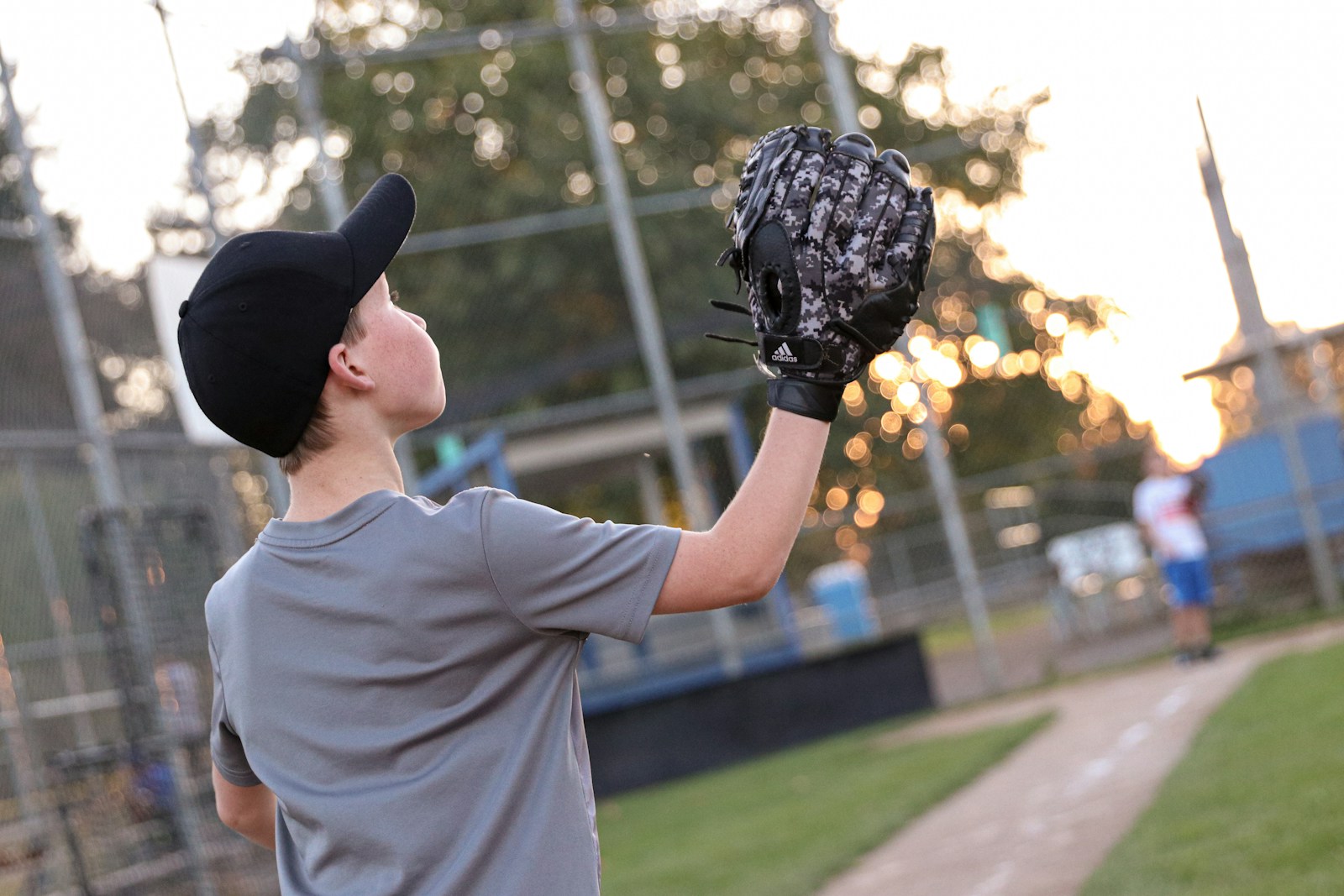
When a youth outfielder drops a fly ball, everyone assumes the problem is the catch. The glove was in the wrong spot. They lost it in the sun. They misjudged where it was going.
Sometimes that is true. But most of the time, the drop happened well before the ball came down. It happened when the outfielder was standing flat-footed in the wrong spot with no read on the ball because nobody ever taught them what to do before it was hit.
Fly ball defense is the most undercoached skill in youth baseball. Not because it is complicated, but because most practice time goes to hitting and infield work, and outfielders spend a lot of time shagging balls without receiving a single piece of structural instruction about how to do their job.
This post fixes that. Here is the complete system for teaching youth outfielders to position correctly, take the right first step, track and catch the ball, and get into throwing position efficiently — covered in the same depth we gave infielders in our ground ball fielding guide.
Why Outfield Instruction Gets Skipped
The outfield gets less instructional attention than any other position in youth baseball for a simple reason: the errors are less frequent and less visible than infield errors. A shortstop who boots a ground ball makes an error on a play that happens multiple times a game. An outfielder who is out of position might only cost the team once every three games, and when they do, it often looks like a misread rather than a preparation failure.
That invisibility is exactly why outfield development lags. Coaches do not see the root cause because they are watching the result, not what happened before the ball was hit.
The outfielder who is in the right spot, takes the correct first step, and reads the ball accurately off the bat makes difficult plays look routine. The outfielder who is in the wrong spot, takes a false step, and misreads the ball makes routine plays look difficult. The gap between those two players almost never comes down to athletic ability. It comes down to preparation and instruction.
Part 1: Pre-Pitch Positioning
Just like infielders, outfielders have a job to do before every pitch. Most youth outfielders are standing in the same spot regardless of who is hitting, what the count is, what the pitcher is throwing, or what the game situation demands. That is a significant missed opportunity.
Know the Situation Before You Set Your Feet
Before every pitch, every outfielder should know the count, the number of outs, which runners are on base, and what the hitter has done earlier in the game. This information determines not just where to play, but what to do with the ball when it is hit.
A fly ball with a runner on third and one out is a completely different play than a fly ball with nobody on and two outs. In the first situation, the outfielder is thinking about the tag-up throw to home. In the second, they are just catching the ball for the third out. Those two plays require different positioning and different preparation, and an outfielder who has not thought about the situation before the pitch is starting from zero when the ball is hit.
Depth and Shade Adjustments
Every outfielder should adjust their depth and shade based on the hitter. A pull hitter who hits the ball hard should push the outfielder in that direction before the pitch. A hitter who consistently hits the ball to the opposite field should shift the outfielder a step or two the other way. A hitter who hits for power should push the outfielder back. A hitter who makes contact but does not drive the ball should move the outfielder in.
At the youth level, players do not have scouting reports. But they have eyes. They have watched the hitter take previous at-bats in the game. They know what the pitcher has been throwing. They know where the ball has been going. That information is available to every outfielder on every pitch. The question is whether they are using it.
The Ready Position for Outfielders
The outfield ready position is different from the infield ready position, and this distinction matters.
Infielders crouch lower with hands near the ground because ground balls are their primary responsibility and they need to be ready to move laterally at low angles. Our ground ball fielding guide covers that pre-pitch routine in full.
Outfielders set up in a taller, more upright athletic stance with feet shoulder-width apart, knees slightly bent, and weight on the balls of their feet. Hands rest on the thighs, not the knees. This position allows the outfielder to read the ball off the bat from a higher vantage point and push off in any direction, including backward, which is where most of the difficult plays happen.
As the pitcher enters their delivery, the outfielder takes a small, rhythmic step forward — the same creep we teach infielders — to get weight off the heels and into forward momentum. This step is just as important in the outfield as it is at shortstop. An outfielder who is flat-footed when the ball is hit has already given up a full step in any direction.
Part 2: The First Step
The first step is where most fly ball errors are created. Get the first step right and the rest of the play becomes dramatically easier. Get it wrong and the outfielder is recovering for the entire play.
The Cardinal Rule: First Step Is Always Back
The single most important rule in outfield play is this: when in doubt, the first step is back.
Here is why. A ball hit over an outfielder's head is one of the most difficult plays in baseball. An outfielder who takes a false step forward on a ball hit over them has almost no chance of recovering to make the catch. A ball hit in front of an outfielder who takes a step back is still catchable, because the outfielder can always come forward on a misread. They cannot go back in time to undo a false step forward.
Train youth outfielders to make the first step back their automatic default until they have a clear read that the ball is coming in. The false step forward — one of the most common habits in youth outfielders — needs to be identified and eliminated early, because it gets more costly as players advance and pitching velocity increases.
The Drop Step
When a ball is hit over the outfielder's head or to either side deep, the correct movement is the drop step. The outfielder opens the hips toward the direction of the ball, drops the foot on that side back and at an angle, and sprints to the spot where the ball will land.
Drop step to the right: The right foot drops back and to the right, the hips open to the right, and the outfielder sprints at an angle to track the ball.
Drop step to the left: The left foot drops back and to the left, the hips open to the left, and the outfielder sprints at an angle.
The drop step is a skill that requires drilling. Most youth outfielders turn and run with their body square to the ball, which means they are running sideways to track it rather than using their full speed. A proper drop step gets the hips open and the body running straight so the outfielder uses their full athletic ability to close on the ball.
Reading the Ball Off the Bat
The first step is only as good as the read that triggers it. A perfect drop step in the wrong direction is worse than a slow drop step in the right one.
Reading the ball off the bat is a skill, and like all skills it develops through deliberate practice and repetition. There are three primary cues outfielders use to read the ball at contact.
Sound. The sound of the ball off the bat tells an outfielder a significant amount before they even see the ball clearly. A sharp crack usually means a hard-hit ball. A duller sound usually means weaker contact. Young players who have been to professional games and paid attention to this — something we specifically recommend in our GreenJackets game development post — develop this read faster than players who have only practiced from fungo situations where the sound is different.
The hitter's swing plane. An uppercut swing that makes contact produces a higher trajectory. A flat or downward swing that makes contact produces a lower, harder trajectory. Outfielders who watch the swing before the ball is hit have an extra fraction of a second to begin their read.
The angle of the ball off the bat in the first 30 feet. The trajectory of the ball in the first 30 feet of flight tells the outfielder almost everything they need to know about where it will land. A ball that comes off the bat on a steep upward angle is going deep. A ball that comes off the bat on a flat angle is coming in quickly. Training players to read that early angle rather than waiting until the ball is fully in the air is one of the most effective ways to improve first step accuracy.
Part 3: Routes and Angles
Once the first step is correct, the route to the ball determines whether the outfielder gets there with time to set up the catch and throw or arrives late and off-balance.
Straight Lines Are Usually Wrong
The most efficient route to most fly balls is not a straight line to where the ball will land. The most efficient route is an arc that allows the outfielder to keep the ball in front of them as long as possible, arrive at the catch point with momentum moving toward the infield, and transition directly into the throwing position without stopping.
Youth outfielders who run straight lines to the ball often arrive correctly but then have to stop, reverse their momentum, and reset to throw. That sequence costs two to three seconds on a throw, which is the difference between a runner being safe and being out by a comfortable margin.
The arc approach for balls hit to the outfielder's side: Rather than running directly at the ball, the outfielder takes a slight arc that keeps them running toward the infield side of the catch point. This positions their momentum toward home plate or the target base at the moment of the catch, creating a natural flow into the crow hop and throw.
The Ball Hit Straight Back
A ball hit directly over the outfielder's head is the hardest read in the outfield. The drop step is the tool, but the route after the drop step matters.
The correct route is to drop step to the throwing-arm side whenever possible. A right-handed thrower who drop steps to their right side on a ball directly overhead can catch the ball on their throwing side, which positions them naturally to crow hop and throw without having to re-open their hips after the catch. When the ball forces them to the glove side, they will need to open their hips after the catch before the crow hop, which takes additional time.
Part 4: Catching the Ball High and in Throwing Position
This is where the outfield and infield diverge most significantly, and it is the piece most youth instruction gets wrong.
Catch the Ball High
Outfielders should catch fly balls above the throwing shoulder, not at chest height or below it. This is non-negotiable and it has nothing to do with comfort. It has everything to do with what comes next.
A ball caught below the chest requires the outfielder to raise the ball back up before they can begin the throwing motion. That is extra movement and extra time. A ball caught above the throwing shoulder is already in position to move directly into the throwing motion with minimal repositioning.
Catching the ball above the throwing shoulder with the fingers pointed up and the palm facing the direction of the ball's approach also gives the outfielder the best grip on the ball at the moment of the catch. The transfer to the four-seam throwing grip happens faster when the ball arrives in a high, palm-forward position than when it arrives at the chest in a palm-up position.
Teach this concept before you teach the throw. If the catch position is wrong, the throw will always be slower and less accurate than it should be.
The Crow Hop
The crow hop is how outfielders generate throwing momentum. It is not optional and it is not just for strong arms. It is the correct mechanical sequence for every outfield throw regardless of the distance or the arm strength of the player.
The crow hop connects directly to throwing mechanics: the front foot steps toward the target, the hips open, and the arm comes through with momentum behind it. Outfielders just build that sequence off the catch rather than off a set position on the mound.
Here is the complete crow hop sequence for a right-handed thrower:
1. Catch the ball above the throwing shoulder. As described above. The glove is high, fingers pointing up.
2. Land on the throwing-side foot. As the ball enters the glove, the right foot (for right-handed throwers) plants as the landing foot. This is the foundation of the crow hop. The throwing-side foot plants first because it positions the body to push off directly toward the target.
3. Hop and step. From the right-foot plant, the outfielder hops forward and lands on the left foot, stepping directly toward the target. This hop generates forward momentum and positions the hips to open toward the target on the throw.
4. Throw. The hips open, the arm comes through, and the throw is made with the full momentum of the crow hop behind it.
The crow hop should be one fluid, continuous motion from catch to release. Youth outfielders who stop at the catch and then try to set up the crow hop are doing it in two separate pieces. The transition from catch to crow hop happens simultaneously, not sequentially.
Drills That Build These Habits
Drop Step Reaction Drill
Purpose: Build the correct first step on balls hit behind the outfielder.
Setup: Outfielder in ready position. Coach stands 10 feet in front facing them, ball in hand.
How to run it: Coach points left or right with a finger — no verbal call — and the outfielder executes a drop step in that direction immediately. Coach then tosses a fly ball over that shoulder. Outfielder tracks and catches.
The point of the silent signal is to train the foot movement before the ball is in the air, which mirrors the game situation where the read off the bat triggers the drop step before the ball's destination is fully clear. Run 15 reps per side per session.
Arc Route Drill
Purpose: Train the correct curved approach to balls hit to the outfielder's side.
Setup: Place a cone 10 feet to the right or left of the outfielder at a 45-degree angle forward. Coach hits or throws fly balls to that side.
How to run it: The outfielder must route through the cone before making the catch, which forces the arc approach rather than a direct line. After the catch, they complete the crow hop and throw to the target.
Progress to balls hit deeper and further to the side as the arc route becomes comfortable at shorter distances. Run 10 reps each side.
Catch High and Throw Drill
Purpose: Build the connection between correct catch position and efficient crow hop.
Setup: Outfielder at 60 to 80 feet from a target (cutoff man or base). Coach throws fly balls at moderate height.
How to run it: Outfielder catches the ball above the throwing shoulder, plants on the throwing-side foot, crow hops, and throws to the target. Coach evaluates: Was the catch above the shoulder? Did the throwing-side foot land at the catch? Was the crow hop one continuous motion?
Run 15 reps. For players who are struggling with the catch height, place a glove or cone on the ground at catching position to remind them where high is relative to their body.
Game Situation Fly Ball Drill
Purpose: Connect fly ball mechanics to game situation awareness and decision-making.
Setup: Full or partial outfield with runners on designated bases. Coach announces the situation before each fly ball.
How to run it: Coach hits fly balls to outfielders after announcing a game situation. Outfielder must call the ball, make the catch, and execute the correct throw for the situation. Other fielders play their roles in real time.
The evaluation is not just whether they caught the ball. It is whether they were in the right position before it was hit, whether they communicated, and whether their throw went to the right base for the situation called.
The Position Most Coaches Ignore Until It Is Too Late
The outfield is where games are lost in youth baseball. Not because of errors alone, but because of routine balls that become doubles, because of throws that go to the wrong base, because of outfielders who are standing in the wrong spot when a ball is hit in the gap.
All of those outcomes trace back to the same root: nobody taught the outfielder what to do before the pitch.
Pre-pitch positioning, the correct first step, reading the ball off the bat, the arc approach, catching high, and the crow hop are a complete system. Each piece connects to the next. And when a youth player has been taught all of them and has drilled them with intention, they stop looking like a kid who was told to go stand in right field and start looking like an outfielder.
That is the difference instruction makes. And it is exactly the kind of instruction MGBA-approved coaches deliver in private lessons and Saturday camps across the CSRA.
Register your player or book a defensive skills session and build the outfield foundation that shows up in games, not just in practice.
Frequently Asked Questions
Why does my kid always take a step forward before going back on a fly ball? The false step forward is the most common outfield habit in youth baseball and it develops for a simple reason: most balls in youth baseball are hit in front of the outfielder, so stepping forward becomes the automatic response. Correcting it requires drilling the drop step repeatedly until the step back becomes the default on any ball that is not clearly coming in. The drop step reaction drill above addresses this directly.
Should outfielders catch fly balls with two hands? The standard for outfielders catching fly balls is one hand on balls that require any movement to catch. Two hands are appropriate on routine balls where the outfielder has time to set up comfortably. The reason is that two-hand catches on balls requiring movement often cause outfielders to slow down to secure the catch with both hands, which is slower and less efficient than a one-hand catch going into the crow hop. The throwing hand should be close to the glove to facilitate a fast transfer, but it does not need to be on the ball at the moment of the catch.
What is a crow hop and why does it matter in youth baseball? The crow hop is the footwork sequence outfielders use to generate momentum toward the target before throwing. Throwing-side foot plants at the catch, the outfielder hops forward, and the front foot steps toward the target. It adds significant velocity and accuracy to outfield throws without adding arm stress. Every youth outfielder should learn it. Most do not, which is why outfield throws are weak and inaccurate in most youth games. For the full throwing foundation that supports the crow hop, see our guide on teaching a kid to throw correctly.
At what age should outfielders start learning the drop step and crow hop? The drop step can be introduced as early as age 8 or 9 in a simplified form. The full crow hop with the correct footwork sequence is appropriate to teach starting around age 10 to 11, when players have enough body coordination to execute it consistently. Do not wait until high school to introduce these concepts. The habits formed between 9 and 13 define how a player plays the outfield for the rest of their career.
How do I teach my kid to read the ball off the bat better? Repetition in game-speed situations is the most effective teacher, but two things accelerate the process. First, take them to professional or high-level amateur games and have them watch outfielders specifically — the read off the bat is visible in person in a way it is not on television. Our GreenJackets game development guide walks through exactly what to watch for at SRP Park. Second, use a pitching machine or live fungo in practice at game-realistic distances and have the player call "in" or "back" on every ball before they move. The verbal call forces a read rather than a reaction.
Kenny Flermoen is the Founder and Academy Director of Mind Game Baseball Academy, based in North Augusta, SC. He brings 21+ years of coaching experience from tee-ball through Division I, a B.S. in Sports Management, and a Master's degree in Coaching and Athletic Administration from Concordia University-Irvine.
About the author

Related posts